Description
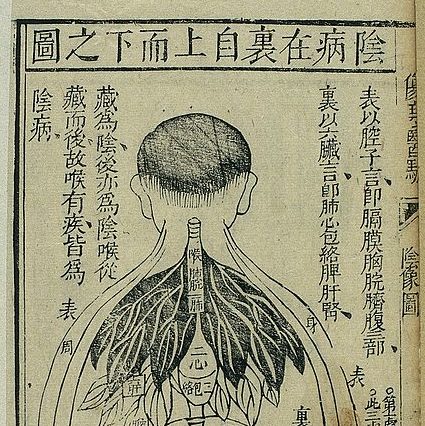
Most of us will be familiar with the importance of the diaphragm with regards to breathing but it also performs other vital functions that you are probably less familiar with such as posture and digestion.
Why how you breathe matters!
Anyone who has spent enough time learning about exercise and mindfulness or meditation, comes across a rather strange idea – that there is more than one way to breathe. Most of the time we don’t think about breathing, our body breathes on its own without us having to tell it how! But knowing the full story behind “diaphragm breathing” will help you get deeper and more relaxed breathing, and will help you support your body in a safe, protective posture.
Did you know that the diaphragm actually supports your posture too?
 The diaphragm is the one important structure that helps integrate lumbar stability. While many practitioners focus on the ability of the diaphragm to maintain an adequate breath, they forget it plays an integral part in providing stability and mobility to the lumbar vertebrae. This attachment goes as low as the L1-L3, so that’s a pretty far reach when we breathe.
- Importance of the diaphragm in meridian function
- The three burners and the diaphragm
- Muscle tonus: hyper and hypo
- Reasons for hypertonicity
- Symptomatology of poor diaphragmatic function
- Assessment of Diaphragmatic Function.
- Visual observation
- Palpation
- Breath holding time
- Thoracic Mobility
- Snider’s Test
- Chapman’s and Bennett’s Reflexes
- Acupuncture points: primary and secondary
- Emotional release techniques (ESR).
- Diaphragmatic exercises.
Date
25 April 2026
Time
9.30am-4.30pm
Cost
£100
Location
International College of Oriental Medicine, Van Buren House, Green Hedges Avenue, East Grinstead, West Sussex RH19 1DZ.
ICOM is located about 10 minutes walk from East Grinstead train station, with direct trains from London Victoria. For those coming by car, we have a private car park with plenty of parking spaces.
Eligibility
This course is suitable for Acupuncture practitioners with a BAAB Accredited qualification or Acupuncture students who are in their second year onwards. If unsure, please email [email protected] before booking.
About the teacher
Marek Urbanowicz initially trained in Shiatsu in the mid 1970s, then in Swedish massage and reflexology. He enrolled at the College of Traditional Acupuncture in 1976 studying under J.R. Worsley and received a Licentiate of Acupuncture (Lic.Ac) in 1979. He was awarded a BAc in 1983 and an MAc in 1987. Since the late 1990s, Marek has been studying Japanese style acupuncture and has lectured at a number of Acupuncture colleges.
Marek encountered kinesiology in 1980 with Brian Butler and in 1983 he attended the first advanced kinesiology course in Holland with Dr. Sheldon Deal, continuing to study with him for over 10 years. In the late 1980s he attended the ICAK course with Chris Smith, passing the Clinical Competence exam in 1996. He has been a member of ICAK ever since. At the same time, Marek taught muscle testing alongside Robert Tisserand (author of The Art of Aromatherapy) for 5 years in the 1980s at the Raworth College.
In 2014 he was awarded MA from the Royal Central School of Speech and Drama with a thesis on the diaphragm and voice. He has studied nutrition with Dr Stephen Davies and also Dr Lawrence Plaskett and has been in full-time practice since 1979, running a large multi-disciplinary clinic from 1994-2007.
Cancellation policy for CPD course bookings
- Refunds for cancellations two or more months before the course commencement will incur a 15% administration fee.
- Refunds for cancellations between two months and two weeks before the course commencement will incur a 25% administration fee.
- Refunds for cancellations two weeks before the course commencement will incur a 50% administration fee.
- No refund will be given for no shows or cancellations upon the course commencement.
- Any amount overpaid by the student will automatically be refunded to the student’s account.
- If for any reason a course is cancelled by ICOM, all money received will be refunded in full. ICOM will only cancel a course if absolutely necessary.